
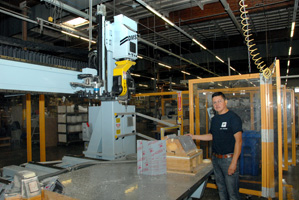
 Thermoforming of plastic has been around for many years, but, as with almost every other industry, technology has made some big changes in how thermoforming works. Specialized computer programs now allow us to be even more precise during the thermoforming process, which greatly increases the efficiency of each job as well as the overall quality of the parts. Specifically, computers have increased the consistency of the parts, so that each part is almost an exact replica of the other. This means that parts fit seamlessly into a product, giving the end client a problem-free experience.
The efficiency gains we’ve made with technology means that our thermoforming process runs faster and smoother. For example, we can repeat same-job setups, which saves lots of processing and heating time. This translates into lower prices for our clients and a faster turnaround of their orders.
At Tru-Form Plastics, we embrace technology that allows us to provide better products for our clients with a faster turnaround and lower costs. Contact us today to learn how we can help you save on your plastic parts needs.